
Jewel Color Sort: Diamond Game
HappyTapLandPuzzle
4.577.00 Reviews
- Version
- 2.2.1
- Installs
- 1.00M
- Age Rating
- Everyone
Screenshots
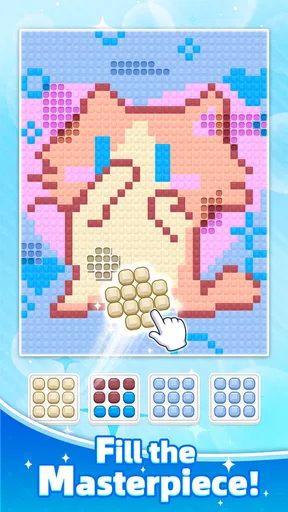
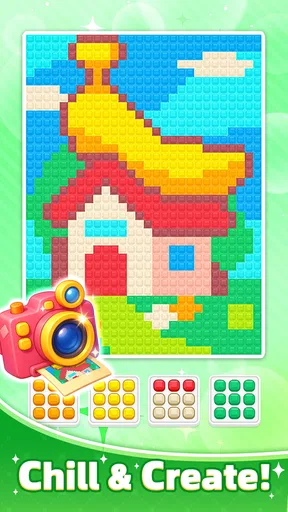

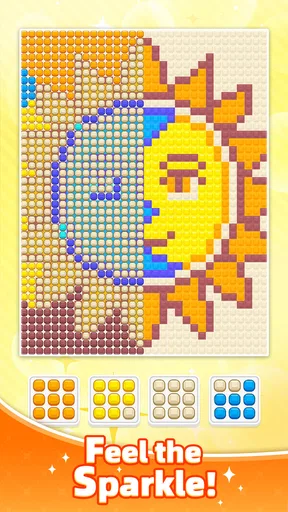
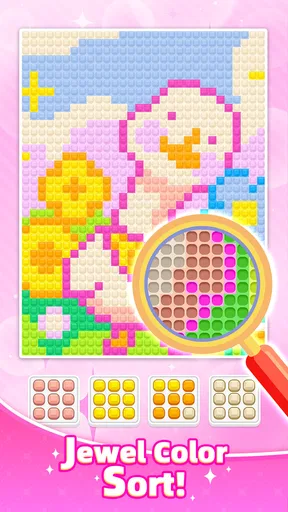
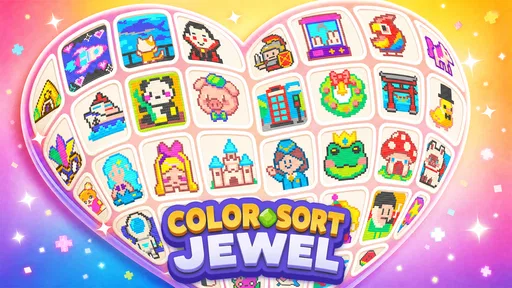
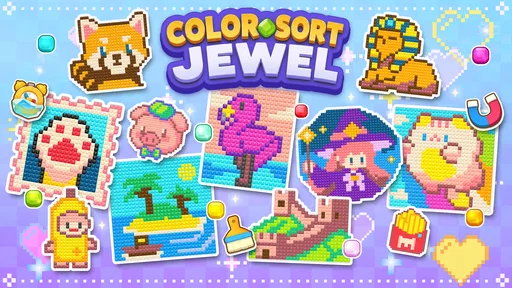
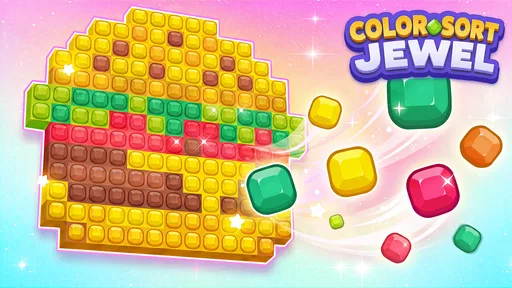
Our Review of Jewel Color Sort: Diamond Game
 Analysis by Appyee
I spent time with Jewel Color Sort: Diamond Game as a casual puzzle player, paying particular attention to how comfortably it works in different situations and for different abilities. Its basic idea is easy to understand: sort colorful jewel pieces and complete relaxing art-style puzzles. That makes it approachable from the first session, but the experience is more nuanced than the short store description suggests. Some parts are wonderfully clear and calming, while others depend heavily on visual recognition and precise touch.
Created by HappyTapLand, this free puzzle game sits in a familiar space between color sorting, diamond-style coloring, and short relaxing challenges. It has reached over a million installs and holds a 4.5 average from around 35 thousand ratings, which fits my impression that it is designed for broad, low-pressure play rather than for expert puzzle fans. It is rated Everyone, runs on Android 6.0 or later, and the current version is 2.2.1.
How clearly the game communicates what to do
I find that the game’s main strength is how quickly its visual goal comes into view: the board itself points me toward what to sort, without asking me to learn a long rule set first. That makes the opening feel approachable, though color and layout do much of the explaining. Next, I’ll look at how that visual guidance shapes the moment-to-moment experience, especially when a player needs a little more time to interpret the board.
Readable goals without a long learning curve
The strongest part of the design is its immediate premise. When I opened a puzzle, I did not need a lengthy explanation to understand that the task involved matching or sorting jewels and gradually completing an image. That simplicity matters for people who dislike complicated menus or games that introduce several systems at once. The short rounds also make it easy to experiment without feeling that a mistake has ruined a long session.
The visual language is central to the experience. Jewel colors, containers, and unfinished artwork provide most of the information the player needs. For someone who processes pictures quickly, this is pleasantly direct. I could glance at the board, identify the apparent target, and begin tapping without constantly checking instructions.
That clarity has a limit, though. A game built around color and visual arrangement can become less obvious when two shades are close together, when the screen is small, or when glare makes the jewel surfaces look similar. The game is therefore easy to learn, but not automatically easy for every player to interpret. I would have preferred more confidence that the visual distinctions remain equally clear in difficult lighting or for people who do not distinguish colors easily.
Navigation that suits short visits
The overall format works well for the way I normally use casual puzzle games: I can play for a few minutes while waiting, stop, and return later without needing to remember a complicated story or a large map. There is no pressure to build a character or manage a sprawling collection of menus. That reduces mental overhead and makes the game feel suitable for people who want a quiet activity rather than another demanding commitment.
Still, simple navigation should not be confused with perfect accessibility. Large, obvious controls are especially important in a sorting game because the player repeatedly selects small visual targets. If you have limited dexterity, tremors, joint pain, or difficulty making accurate taps, the basic simplicity may not remove the physical challenge. My experience is that the concept is welcoming, but the interaction still asks for steady screen control.
One useful habit is to slow down before tapping a piece that looks similar to its neighbors. Fast play is not really rewarded by the relaxing format, and deliberate selection reduces the frustration caused by an accidental move. I also found that playing with the phone held steadily, rather than one-handed while walking, made the board easier to read and interact with.
Information density and cognitive comfort
Compared with match-three games that combine timers, boosters, missions, and competing objectives, this title feels mentally lighter. That is a genuine benefit for players who want a predictable puzzle routine. It may also suit someone trying to avoid games that constantly interrupt the main task with complicated decisions.
On the other hand, players who need strong non-color cues may find the presentation less comfortable. The central logic is visual, so the game does not naturally explain every distinction through words or symbols. If you rely on spoken instructions, high-contrast labels, or text alternatives, I would approach it cautiously and test the opening puzzles before committing to longer play sessions.
Touch, vision, and sensory comfort during play
For me, comfort depends less on the puzzle idea than on the conditions around the screen: lighting, display size, hand stability, and how easily the jewel colors stand apart. Those factors can turn the same quick task from soothing into tiring, so a small adjustment in setup may matter more than playing faster. The next section considers how I’d fit the game into ordinary breaks and shared-device routines.
Why the jewel presentation feels satisfying
The appeal comes from the combination of sorting and visual completion. Moving from a scattered or incomplete arrangement toward a finished-looking result gives each small action a clear purpose. I found that satisfying after a busy day because the game asks for attention without requiring the same kind of sustained planning as a strategy puzzle.
The jewel theme also makes the board feel more tactile even though everything happens on a flat screen. Distinct colors and decorative surfaces help separate the pieces at a glance. For players with good color vision and comfortable touch control, this is probably the main reason the game feels more pleasant than a plain tile-matching exercise.
Where visual dependence becomes a barrier
The same presentation can exclude people who need more than color to identify a target. Color-blind players may have difficulty when the important difference between pieces is shade rather than shape or a written label. Older players with reduced contrast sensitivity may also need a larger display and stronger ambient light. These are not minor details in this particular game; they affect the core act of deciding which jewel belongs where.
I would not recommend assuming that the Everyone rating means every visual need has been covered. Age suitability and accessibility are different questions. A child, adult, or older player may understand the rules perfectly and still struggle with the visual distinctions or small touch targets. If you are choosing it for someone else, watching them try a short session is more useful than judging from the rating alone.
There is also a sensory trade-off in the game’s relaxing presentation. Players who enjoy colorful, decorative puzzle boards may find them inviting, while anyone sensitive to busy visual surfaces may prefer a plainer sorting game. I did not experience the jewel theme as overwhelming, but I can see how repeated sparkle-like details and dense color patterns could make sustained play tiring for some people. Lowering general screen brightness and taking regular breaks can help, although that changes the phone experience rather than the game itself.
Practical touch strategies
For players with less precise movement, I found three practical approaches helpful. First, use two hands or rest the phone on a surface instead of trying to balance it in one palm. Second, tap from the center of a jewel rather than its edge, where a neighboring item may be closer. Third, avoid playing during movement, because a bus ride or a walk turns a simple tap into a much harder target.
These suggestions do not turn the game into an accessible control scheme for everyone, but they make its existing interaction more manageable. They also reveal an important trade-off: the game is relaxing when the player controls the pace, yet it becomes less comfortable when the phone, hand, or lighting is unstable.
Using it in everyday situations
I see this as a game best approached in short, intentional windows, when I can keep the phone steady and give the colors a clear look rather than squeezing in taps while distracted. It can suit a quiet wait or a brief pause, but it is less convenient when attention or hands are already occupied. With that everyday context in mind, I’ll weigh the practical limits that remain and who is most likely to enjoy the experience.
A good fit for waiting rooms and short breaks
A realistic use case is a ten-minute wait when I want something more engaging than scrolling but less demanding than a full game session. The sorting format gives me a clear activity immediately, and I can stop once the break is over. It is also a reasonable choice for winding down before bed if colorful visual play does not keep you alert.
It may work well for families who want a simple puzzle to pass around, provided each player can comfortably distinguish the colors and tap the pieces. Because the age rating is Everyone, the premise is broad enough for mixed-age use. However, I would still guide younger children at first, especially if in-app purchase prompts appear during play. The game itself is free, while individual in-app purchases range from $1.99 to $99.99, so a family device should have purchase controls set appropriately.
The game is less suitable when you need audio-led entertainment, when your hands are occupied, or when you are playing in bright outdoor light. It also does not seem like the right choice for a social group seeking competition or conversation. Its pleasure comes from quiet concentration, not from comparing scores or coordinating with other players.
How it compares with common puzzle alternatives
Against match-three games, this title feels calmer and more focused. Match-three alternatives often offer faster reactions, cascading effects, power-ups, and a stronger sense of progression. That can be exciting, but it also creates more visual movement and more decisions per minute. I would choose Jewel Color Sort for a slower decompression session and a match-three game when I want energy and variety.
Against traditional logic puzzles, it is easier to start but usually less intellectually demanding. A Sudoku or nonogram asks me to maintain rules over a larger reasoning process, while this game gives more immediate visual feedback. That makes it better for casual relaxation, but not necessarily for someone looking to train extended deduction or solve deeply layered problems.
Against digital coloring apps, the sorting element gives the activity a little more structure. I am not simply filling an image at my own pace; I am also organizing jewel pieces and making placement decisions. The trade-off is that a pure coloring app may feel more expressive and forgiving, especially for someone who wants to choose colors freely rather than follow a puzzle’s visual logic.
Who should think twice before installing
I would hesitate to recommend it to players who need strong text-based instructions, audio guidance, or non-color identification. I would also point cautious buyers toward another puzzle if they dislike any possibility of purchase prompts or prefer a completely paid-once experience. Free access is convenient, but the listed purchase range means the surrounding monetization deserves attention on shared devices.
Players who want a long-term competitive challenge may outgrow the basic format. The game’s strength is its approachable, repetitive rhythm, not a complex campaign or a demanding mastery curve. If you need constant novelty, deep strategy, or multiplayer interaction, a different puzzle category will probably serve you better.
Remaining friction and my inclusive verdict
My overall view is that the game’s simplicity is a genuine welcome, but it does not erase the demands of color recognition and precise touch. I would choose it for calm, visual sorting, and consider a text-led or less color-dependent puzzle when those demands get in the way. The final section brings those trade-offs together into an inclusive recommendation, with a focus on matching the game to the player rather than assuming one style fits everyone.
What still gets in the way
The biggest barrier is that the game’s main communication method is visual color sorting. That is not a problem for everyone, but it is too important to overlook. Similar shades, decorative jewel surfaces, and small targets can combine into a frustrating experience for players with color-vision differences, reduced vision, or limited fine-motor control.
Context matters just as much. A stable phone on a bright but indirect surface is far more comfortable than a moving device in sunlight. A short session is easier than prolonged play when the artwork begins to feel visually repetitive. These are ordinary circumstances, yet they strongly affect whether the game feels soothing or tiring.
The purchase structure is another point to consider. The game costs nothing to start, which lowers the barrier for trying it, but optional items priced from $1.99 to $99.99 can be significant depending on the player and the device owner. I would treat it as a free-to-try puzzle and make sure purchase protections are active before handing it to a child.
My recommendation
For me, the best description is a gentle visual sorting game that succeeds when I want a short, low-pressure break. HappyTapLand has kept the central idea approachable, and the mix of jewel arranging and art completion gives the simple taps a satisfying purpose. The current release, version 2.2.1, is a sensible option for Android users on version 6.0 or newer who enjoy colorful puzzles and do not need a highly complex challenge.
I recommend it to players with comfortable color recognition and reliable touch control, especially those who prefer quiet solo play over timers, competition, or elaborate progression. I would recommend testing it carefully for anyone with visual or motor limitations, rather than assuming the Everyone rating guarantees a comfortable experience. The game can be inclusive in its simplicity, but its dependence on color and accurate tapping remains a real boundary.
Overall, Jewel Color Sort: Diamond Game earns its place as an easygoing puzzle for short breaks, family-friendly experimentation, and visual relaxation. I would install it for a calm few minutes, keep spending controls in mind, and choose a different app when accessibility needs require text alternatives, audio direction, or more flexible controls. Its strongest quality is not depth; it is the uncomplicated satisfaction of making a colorful board gradually feel complete.
Verdict
Strengths of Jewel Color Sort: Diamond Game
- Easy-to-learn sorting mechanics suitable for quick casual play.
- Bright jewel visuals make the board clear and pleasant to follow.
- Levels gradually introduce more challenging color arrangements.
- Works well for short sessions during commutes or breaks.
- Relaxing gameplay does not require fast reflexes or complex controls.
Limitations of Jewel Color Sort: Diamond Game
- Repeated sorting tasks may feel monotonous after extended play.
- Later levels can become difficult without careful planning.
- Hints or extra moves may be limited or tied to in-app purchases.
- Ads may interrupt the experience between levels or attempts.
- Progress and features may depend on an internet connection.
Similar Picks in This Category
View All
Block Blast!
HungryStudio4.8

Braindom: Brain Games Test
Lahana Game Studio4.6

AMAZE!
CrazyLabs LTD4.6

Sudoku - Classic Sudoku Puzzle
Oakever Games4.7

Art Puzzle - Puzzle Games
Easybrain4.8

Amaze GO!
Oakever Games4.9
Frequently Asked Questions
What is Jewel Color Sort: Diamond Game?
Jewel Color Sort: Diamond Game is a casual puzzle game based on sorting colorful jewel pieces into matching containers or tubes. The objective is to organize every color correctly while following the available moves and space limitations. Its simple rules make it easy to start, but later stages can require careful planning, especially when several colors are mixed together and one incorrect move can block the solution.
How do you play Jewel Color Sort: Diamond Game?
To play, tap or select a jewel stack and move it to another container according to the game’s rules. Usually, you can place a jewel only on the same color or in an empty container, and the available space must be considered before every move. The level is completed when all jewels are grouped by color. Watching the top pieces and planning several moves ahead is essential.
Is Jewel Color Sort: Diamond Game free to download and play?
The game is generally available as a free download, allowing players to begin sorting puzzles without purchasing the full application. However, free puzzle games commonly include advertising, optional hints, extra moves, or other in-app purchases. Before downloading, check the current Google Play or App Store listing for the exact pricing, advertising policy, and purchase options available on your device.
Does Jewel Color Sort: Diamond Game work offline?
Many of the sorting levels can usually be played without a continuous internet connection, which makes the game suitable for short sessions while traveling or when mobile data is unavailable. Nevertheless, an internet connection may be required for advertisements, rewards, cloud features, updates, or purchase verification. Availability can vary by version, so test the game offline after installation if this feature is important to you.
Is Jewel Color Sort: Diamond Game suitable for children and beginners?
Yes, the basic gameplay is accessible to children, beginners, and players who prefer relaxed puzzle experiences because the controls are simple and the objective is explained through visual actions. More advanced levels may still challenge younger players and encourage logical thinking. Parents should review the game’s advertising and in-app purchase settings, particularly if the application will be used on a child’s device.
Play our best games!


